
[ad_1]
Are you struggling to grasp the wildlife images gear you want? Do you wish to know the varieties of gear that wildlife photographers use?
Don’t fear.
As a result of this text is all about gear for wildlife images. You’ll uncover the significance of various cameras, totally different lenses, and extra. And also you’ll come away figuring out the gear you’ll must develop into a wildlife photographer.

You see, photographers typically declare that it’s
not the images gear that issues; it’s the ability of photographers.
And that is usually true.
However in terms of wildlife images…
Gear actually is a giant deal. With out the appropriate
gear, you received’t have the ability to snag sharp images of distant wildlife. You received’t be
in a position to seize beautiful motion photographs, nor will you have the ability to get shut sufficient
for frame-filling fowl images.
Important Wildlife Images Gear
Are you able to be taught all about gear?
Let’s get began.
1. Digital camera for Wildlife Images
Relating to selecting a digicam for wildlife images, you may have two actual choices:
Mirrorless cameras and DSLRs.
Historically, DSLRs have been the go-to
digicam fashions for wildlife photographers. Whereas mirrorless methods have
threatened to knock DSLRs off their throne, wildlife images nonetheless leans
closely towards DSLRs–as a result of DSLRs supply just a few key options that mirrorless
cameras battle to match.

Canon 5D Mark IV – probably the most fashionable DSLRs for wildlife images
First, DSLRs supply optical viewfinders. Because of this you’ll have the ability to monitor transferring wildlife by way of the lens, which is usually simpler than utilizing an digital viewfinder (EVF), particularly if that digital viewfinder includes lag. When you do resolve to go for a mirrorless digicam, guarantee that the EVF is of very top quality.
Associated article: EVF vs OVF: Optical vs Digital Viewfinder Battle
Second, DSLRs supply extra lenses to select from
than mirrorless cameras, particularly within the wildlife images space. And whereas
some mirrorless methods do provide you with entry to high-quality, wildlife-focused
lenses, they’re usually prohibitively costly.
Whichever kind of digicam you select, it’s essential that you just listen to some specs. You’re going to desire a digicam with a great variety of autofocus factors (and ensure as many are cross-type as potential).
See additionally: Finest Inexpensive Digital camera for Wildlife Images
You must also intention to get a wildlife
images digicam with high-speed steady capturing. At the very least 5 frames
per second is first rate for wildlife images (although 7 or 8 could be higher,
and 10-15 is excellent).

Fujifilm X-T3 – very succesful mirroless APS-C digicam for wildlife images
Lastly, many wildlife photographers want to make use of crop-sensor (APS-C) cameras, as a result of the corresponding crop-factor offers them extra attain.
Associated article: Full Body vs APS-C Cameras: Which Do You Want?
Whereas full-frame cameras are inclined to carry out higher in low mild (which is a standard scenario for wildlife photographers), the extra attain is helpful in all kinds of conditions.

2. Lenses for Wildlife Images
Selecting a wildlife images lens is likely one of the most tough duties a newbie can undertake.
As a result of there aren’t many choices, all issues thought-about, and just about each choice is dear.
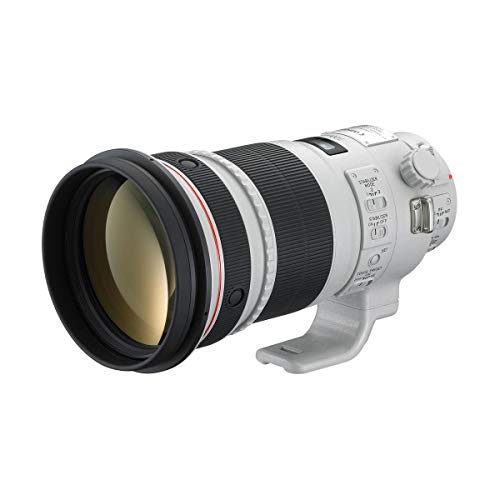
Canon EF 300mm f/2.8 – the most effective excessive finish lenses for wildlife images
You’ll in all probability be tempted to go together with a telephoto zoom, one which extends to 300mm. However the reality is that 300mm is fairly tough to make use of for wildlife; it’s simply too brief. When you’re utilizing a crop-sensor digicam, then you need to intention for at the least 400mm (the place 300mm is an absolute final resort). A 500mm lens is usually higher, nevertheless it’s laborious to search out 500mm lenses with low costs and good optics rolled into one.
See additionally: The way to Take Skilled Wildlife Images
Word that you just’ll desire a lens with quick autofocus capabilities (for monitoring wildlife), in addition to sharp glass.
A huge most aperture (of at the least f/4) received’t go amiss, both. And chances are you’ll wish to take into consideration dimension and weight. When you’ll typically be touring, it might make sense to make use of a shorter focal size and sacrifice the additional attain for dimension. Then again, when you don’t thoughts utilizing a tripod on some events, an even bigger lens will just do advantageous.

Fujifilm XF100-400mmF4.5-5.6 – turns into 600mm lens on APS-C digicam
Ideally, your lens could have a stable construct high quality and climate sealing; that is essential for these wildlife photographers who actually topic their gear to tough situations. And whereas that will not be you proper now, it’s price contemplating whether or not you’ll be like that sooner or later.

3. Tripod for Wildlife Images
A tripod isn’t a necessity in terms of wildlife images.
However it is rather useful.
See additionally: Wildlife Images Digital camera Settings
Wildlife images is usually carried out with massive lenses in variable lighting situations, and the sunshine is usually poor. Even when you’re capturing throughout a pleasant night, you’ll nonetheless find yourself with considerably low mild–and want that you just had a strategy to stabilize your setup.
That’s the place a tripod is available in.
See additionally: Quick Shutter Pace Images
I’d suggest getting a tripod that may get
down low, to be able to shoot on a stage along with your topic. You’ll additionally need
one thing light-weight (so carbon fiber legs are the way in which to go), and decently
steady. However observe {that a} wildlife images tripod doesn’t must be
rock-solid. It’s stabilizing your tools, not letting you are taking lengthy
exposures.
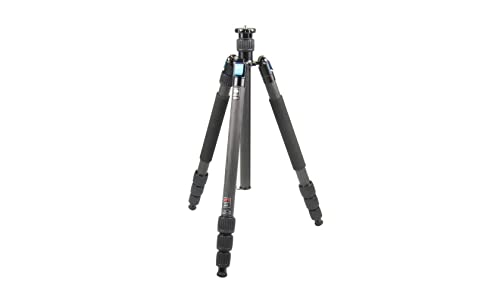
Sirui W-2204 Waterproof Carbon Fiber Tripod
When you don’t like tripods and would favor to
go with out one, you’ll be able to guarantee that your lens consists of some type of picture
stabilization. It will compensate for a lot of the digicam shake launched by
the lens dimension.

4. Teleconverter for Wildlife Images
A teleconverter permits you to lengthen your
lens’s focal size past its native choices.
As an illustration, a 2x teleconverter doubles your
focal size, so a 400mm lens would develop into an 800mm lens.

That is nice for wildlife, besides that you just
lose mild when utilizing a teleconverter, so you must stability the lack of mild
towards the worth of the additional attain.
Teleconverters even have high quality points; slapping on a teleconverter degrades picture sharpness, and so you ought to be cautious. In case your lens is ultra-sharp to start with, you’ll be able to typically get away with a 1.4x or a 2x teleconverter. However poor-performing lenses will not often do nicely with teleconverters.
See additionally: Funds Choices Lenses for Chook Images
To not point out that loads of lenses received’t
truly autofocus with teleconverters, so that you’ll must do a little bit of analysis
earlier than shopping for. Lenses with a most aperture of f/2.8 or f/4 are a great guess,
but when your lens features a variable aperture (e.g., f/4.5-5.6) then the
teleconverter in all probability received’t work.
Right here’s the underside line:
Teleconverters will be helpful, particularly on
shorter lenses. However there are many wildlife photographers who don’t use teleconverters,
so don’t really feel obligated to purchase one.
Conclusion
Hopefully, you now have a way of the
wildlife images gear you want–and the way to select from amongst your many
choices.
So I like to recommend you seize the gear and get began
capturing as quickly as potential. Wildlife images is thrilling, and there’s
nothing to be gained by ready!
Articles Associated to “Wildlife Images Gear: Beginning With Wildlife Images“
[ad_2]