
[ad_1]
Are you on the lookout for the greatest digicam for wildlife pictures?
You’ve come to the proper place.

Wildlife pictures is demanding in its
digicam necessities. You want a digicam that may make it easier to get these
once-in-a-lifetime pictures–a digicam that’ll mean you can push your pictures
to the restrict.
We’re going to point out you these cameras as we speak.
Regardless of your price range, we’ve an possibility for you.
So let’s get began.
Fast Abstract – Greatest Digital camera for Wildlife Pictures
What to Search for When Choosing the Wildlife Pictures Digital camera
When selecting the perfect digicam for wildlife
pictures, there are a selection of options to take note of.
And your objective is to select the digicam that does
effectively in as many areas as attainable–whereas staying inside a value you possibly can afford.
Sensor Measurement: Full Body vs Crop
Selecting a wildlife pictures digicam begins
with sensor dimension.
You need to resolve:
Would you like a full body digicam, which comes
with greater dynamic vary and larger low gentle efficiency? Or would you like a
crop-sensor digicam, which gives you larger attain when out capturing?
Many hobbyist wildlife photographers find yourself selecting crop our bodies. Whereas the low gentle efficiency doesn’t fairly match that of full-frame opponents, the added attain is just too good to cross up.
You might also wish to ask your self whether or not you’ll be utilizing a prolonged supertelephoto lens, or a barely shorter possibility. Capturing small birds with a 400mm lens on a full-frame physique goes to be powerful; capturing small birds with a 400mm lens on a crop physique is far more doable.
See additionally: Tutorials for Wildlife Pictures for Inexperienced persons
In different phrases:
Should you’re going to work with an extended wildlife
lens, you’ve gotten the choice to shoot full body.
If not, the crop-sensor physique is the best way to go.
Mirrorless vs DSLR
Lately, mirrorless cameras are all of the
rage.
However can they maintain as much as the trials of wildlife pictures?
See additionally: Greatest Wildlife Pictures Tools
Typically talking, the reply is “Sure.” Whereas
some DSLRs carry out higher than some mirrorless cameras for wildlife
pictures, the reverse can be true–making the query of mirrorless vs
DSLR for wildlife pictures one thing of a toss up.
Or it might be a toss-up, apart from one
factor:
Lens choice.
The largest disadvantage to mirrorless programs is the restricted variety of lenses in every producer’s lineup. Whereas there are many good-yet-inexpensive DSLR lenses for wildlife pictures, mirrorless lenses are far more restricted. Mirrorless lens roadmaps are popping out left and proper, however there’s nonetheless a big hole between mirrorless and DSLR choices, particularly for learners.
Are there mirrorless lenses that work effectively for
wildlife pictures?
Completely.
However for those who don’t wish to drop $2000+ {dollars}
on a wildlife lens, then you definately’re going to battle. Lots.
So I’d usually suggest you begin with a
DSLR, except you’re keen to fork over an enormous sum of cash for a superb wildlife
lens.
Low Mild Efficiency
How a digicam performs in low gentle will have an effect on
your means to shoot at daybreak and nightfall, which is when a variety of wildlife is
lively.
Now, the important thing facet of a digicam’s low gentle
efficiency is its means to shoot at excessive ISOs.
If a digicam produces numerous noise at excessive
ISOs, then it’s lower than excellent for wildlife.
But when a digicam can produce comparatively clear
photos as much as, say, ISO 3200, then it’s a superb possibility.
Focusing Pace and Accuracy
No wildlife digicam is full with out stellar
autofocusing skills.
It ought to supply wonderful monitoring, and will
be capable to focus shortly. That manner, you will be assured you’ll nail essentially the most
crucial pictures.
You might buy a digicam that’s nice for wildlife pictures in each manner–but when it may’t focus shortly, it’s not going to work.
See additionally: Find out how to Take Skilled Wildlife Pictures
So be sure you get a wildlife digicam that
provides quick focusing!
Most Capturing Pace
Should you’re making an attempt to seize motion pictures of
wildlife, then a excessive steady capturing pace is an absolute necessity.
I’m speaking a couple of burst mode of at the very least 7
or 8 frames per second. A steady capturing pace of 10+ fps is even higher.
Whenever you put your digicam in steady
capturing mode, you need to have the ability to maintain down the shutter button–and take
dozens of images in just a few seconds. That manner, you’ll have a superb likelihood of
nailing the crucial second, each single time you must.
That mentioned, a excessive steady capturing pace is
fairly ineffective for those who don’t have a big sufficient buffer:
Buffer Measurement
In sensible phrases, a digicam’s buffer dimension is
outlined by the variety of photos it may seize with out stopping.
So for those who maintain down the shutter button, what number of images will the digicam take earlier than it has to cease?
See additionally: Cheap Hen Pictures Lenses
For wildlife pictures, the buffer dimension is crucial. It’s nice in case your digicam can shoot at 15 frames per second, however that doesn’t matter if the buffer lasts for simply 10 pictures. You’ll have to attend for the digicam to complete writing the pictures to the reminiscence card, and by the point that’s completed, you’ll have missed an amazing shot.
So that you’re going to wish to decide a digicam with
the most important buffer attainable.
Sensor Dynamic Vary
A excessive dynamic vary permits you to seize a larger spectrum of tones in a scene.
See additionally: Greatest Inexpensive Digital camera for Wildlife Pictures
Whereas this isn’t as vital as among the
different standards, a bigger dynamic vary is almost at all times a superb factor. It’ll
assist forestall overexposure and underexposure, particularly in tough lighting
situations.
Climate Sealing
Wildlife pictures typically takes place in some
of the worst circumstances:
Rain.
Snow.
Hail.
(And extra!)
So in case your digicam can’t deal with some publicity
to the weather, it received’t final lengthy.
That’s why climate sealing is a must have for
wildlife photographers.
So, with out additional ado, the perfect cameras for wildlife pictures:
Choosing the Greatest Digital camera for Wildlife Pictures
Greatest Canon Full Body Digital camera for Wildlife Pictures
1. Canon EOS 5D Mark IV

- Megapixels: 32MP
- Lens Mount: Canon EF
- Sensor Measurement: Full Body
- Weight: 800g (1.76lb)
- Measurement: 151 x 116 x 76mm (6 x 4.6 x 3″)
- Value: Test the most recent value right here
The Canon 5D Mark IV has nearly all the pieces a
wildlife photographer may need out of a DSLR:
An unbelievable sensor that’s stellar in low
gentle, good for capturing wildlife pictures at daybreak and nightfall.
Good construct high quality with climate sealing, which
permits you to enterprise out in poor climate.
A terrific AF system with 61 factors (41 of them
cross-type) for quick wildlife monitoring and focusing.
The 5D Mark IV additionally comes with a superb
set of lenses to select from; Canon’s DSLR wildlife pictures lens lineup is
the most effective on this planet.
The principle disadvantage to the 5D Mark IV is the
steady capturing pace. At 7 fps, it’s not low–but it surely’s not precisely excessive,
both.
What We
Like:
- Low gentle efficiency
- Construct high quality
- Robust AF system
- Good 30+ MP decision
What We
Don’t Like:
- Barely decrease steady capturing
speeds - Costly
Greatest Canon Crop Digital camera for Wildlife Pictures
![Canon DSLR Camera [EOS 90D] with Built-in Wi-Fi, Bluetooth, DIGIC 8 Image Processor, 4K Video, Dual Pixel CMOS AF, and 3.0 Inch Vari-Angle Touch LCD Screen, [Body Only], Black](https://m.media-amazon.com/images/I/41CT8Bz8kQL.jpg)
- Megapixels: 34MP
- Lens Mount: Canon EF-S
- Sensor Measurement: APS-C (1.6 x Crop)
- Weight: 700g (1.54lb)
- Measurement: 141 x 105 x 77mm (5.5 x 4.1 x 3″)
- Value: Test the most recent value right here
The Canon 90D is Canon’s premier crop-sensor
digicam–and it guarantees wildlife photographers a variety of energy for a really
inexpensive price ticket.
First, check out the AF system: 45
cross-type autofocus factors for quick focusing. Possibly it’s not fairly as
spectacular because the Canon 5D Mark IV, but it surely’ll carry out effectively, serving to you seize
birds in flight, deer on the run, and extra.
And the physique is climate sealed, so that you don’t
have to fret an excessive amount of about taking the 90D into the sector in powerful climate.
Considered one of my favourite options on the 90D is its
steady capturing pace: at 11 frames per second, you’ll by no means have to fret
about lacking the motion.
What We
Like:
- Cheap value
- Climate sealing
- 45 cross-type AF factors
- 11 fps capturing speeds
What We
Don’t Like:
- Sensor not so good as full-frame
opponents - AF is sweet, however could possibly be higher
Greatest Nikon Full Body Digital camera for Wildlife Pictures

- Megapixels: 47MP
- Lens Mount: Nikon F (FX)
- Sensor Measurement: Full Body
- Weight: 915g (2lb)
- Measurement: 146 x 124 x 79mm (5.7 x 5 x 3″)
- Value: Test the most recent value right here
The D850 options an unbelievable full-frame,
45.7 MP sensor–which manages to pack in nice excessive ISO efficiency with
stellar decision.
Plus, the climate sealing, the spectacular AF
system, and the nice dynamic vary make for a surprising wildlife digicam.
Sadly, the D850 falls down in a number of
key areas. First, its Stay View autofocusing leaves one thing to be desired.
And second, the continual capturing pace solely
reaches 7 frames per second.
But when low gentle is your precedence and also you need
stellar picture high quality, the D850 is a wonderful selection. Plus, it comes with
entry to the Nikon lens lineup, together with a lot of unbelievable
super-telephoto lenses which might be good for wildlife pictures.
What We
Like:
- Superb picture high quality
- Nice low-light potential
- Wonderful autofocus
- Good dynamic vary
What We
Don’t Like:
- Poor Stay View AF
- Mediocre steady capturing
Greatest Nikon Crop Digital camera for Wildlife Pictures

- Megapixels: 21.5MP
- Lens Mount: Nikon F (DX)
- Sensor Measurement: APS-C (1.5 x Crop)
- Weight: 860g (1.9lb)
- Measurement: 147 x 115 x 81mm (5.8 x 4.5 x 3.2″)
- Value: Test the most recent value right here
The Nikon D500 isn’t the most recent APS-C DSLR,
but it surely’s a superb one, tailor-made particularly to motion shooters.
Which makes it wonderful for just about any
wildlife pictures.
The autofocus system is unbelievable, that includes
153 factors (99 cross-type). This makes for fast monitoring, even in low gentle.
Mix this with a ten frames-per-second
steady capturing pace and an amazing buffer, and also you’ve bought your self an
unbelievable wildlife digicam.
To not point out the excessive ISO efficiency, which
rivals that of the Nikon D850.
What We
Like:
- Superb autofocus system
- 10 fps steady capturing
- Spectacular buffer
- Nice low gentle efficiency
What We
Don’t Like:
- Value isn’t as little as opponents
- Comparatively low megapixel rely
Greatest Sony Full Body Digital camera for Wildlife Pictures

- Megapixels: 28MP
- Lens Mount: Sony E
- Sensor Measurement: Full Body
- Weight: 680g (1.5lb)
- Measurement: 147 x 115 x 81mm (5 x 3.8 x 3″)
- Value: Test the most recent value right here
The A9 is Sony’s flagship mirrorless
providing–a digicam designed to rival the perfect of the perfect motion our bodies.
On this, it succeeds.
The Sony A9 encompasses a lightning-fast
autofocus system; it makes use of its 693 autofocus factors for fast focusing, good
gentle or no.
(If that isn’t a wildlife photographer’s
dream, I don’t know what’s.)
Plus, the A9 can shoot at speeds as much as 20 fps,
which is ideal for photographers who like to position themselves within the thick of
the motion. All this, on high of a weather-sealed physique and a very good excessive ISO
efficiency.
The principle draw back to the A9 for wildlife
pictures is the lens lineup; Sony simply doesn’t have the identical tremendous telephoto
choices as Canon and Nikon. This alone shall be sufficient to steer some
photographers away.
However for many who are nonetheless :
Prepare for the ability of the Sony A9. It
actually is unbelievable.
What We
Like:
- Unimaginable autofocus system
- 20 fps steady capturing
- Gorgeous high-ISO efficiency
- Climate-sealing
What We
Don’t Like:
- Very excessive value
- Restricted lens compatibility
Greatest Sony Crop Digital camera for Wildlife Pictures
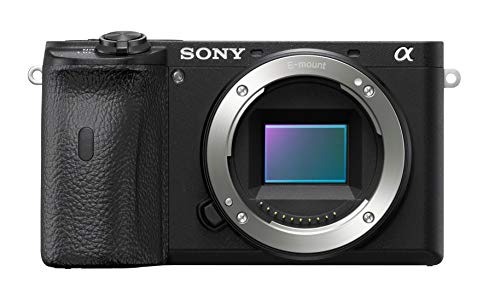
- Megapixels: 24MP
- Lens Mount: Sony E
- Sensor Measurement: APS-C (1.5 x Crop)
- Weight: 500g (1.1lb)
- Measurement: 120 x 66.9 x 69.3mm (4.7 x 2.6 x 2.7″)
- Value: Test the most recent value right here
The Sony a6600 is a incredible digicam for
wildlife pictures, for just a few key causes:
First, any wildlife pictures would like to
use these unbelievable autofocus skills, which stem from 425 AF factors and
unbelievable Sony monitoring software program. You’ll be capable to comply with birds in flight,
combating foxes, leaping canine–you identify it, the Sony a6600 can take care of it.
Plus, the a6600 can shoot 11 fps with a deep buffer
(round 100 pictures), which is sufficient for many wildlife functions.
You’d assume {that a} sub-2000 greenback APS-C
digicam couldn’t supply a lot in the best way of excessive ISO efficiency, however you’d be
mistaken; the a6600 manages to do fairly effectively, even up previous ISO 3200.
In different phrases:
The Sony a6600 is a steal.
Just like the Sony a9, the most important challenge with the
a6600 is the lens lineup. It’ll be some time earlier than Sony can rival Canon and
Nikon’s tremendous telephoto choice.
What We
Like:
- Spectacular high-ISO capabilities
- Good value, contemplating the
options - 11 fps steady capturing
- Superb AF efficiency
What We
Don’t Like:
- Restricted lens lineup
- Value is sweet, however nonetheless out of
some budgets
Greatest Fujifilm Crop Digital camera for Wildlife Pictures

- Megapixels: 26MP
- Lens Mount: Fujifilm X
- Sensor Measurement: APS-C (1.5 x Crop)
- Weight: 383g (13.5oz)
- Measurement: 118 x 83 x 47mm (4.7 x 3.3 x 1.8″)
- Value: Test the most recent value right here
Whenever you take a look at the Fujifilm X-T3 for
wildlife pictures, there’s one factor that’ll get you each time:
A 30 fps steady capturing pace.
Sure, you learn that proper. With the Fujifilm X-T3, you possibly can seize 30 frames per second (although solely within the 1.25x crop mode with the digital shutter). With out the crop mode activated, this drops to a still-impressive 20 fps.
See additionally: Digital camera Settings For Wildlife
Sadly, the buffer isn’t all that
spectacular, so that you’ll solely be capable to shoot for a second earlier than having to attend
for the digicam to catch up. However it could be definitely worth the wait, as a result of 30 fps is
unbelievable for a wildlife photographer.
The autofocus system can be spectacular, with
425 factors coupled with wonderful monitoring, good for photographing transferring
wildlife.
You’ll additionally admire the robust climate
sealing, the nice low gentle efficiency, and the very cheap value.
What We
Like:
- Good value
- Spectacular climate sealing
- Wonderful AF system
- 30 fps steady capturing
What We
Don’t Like:
- Comparatively low megapixel rely
- Small buffer
Conclusion
You need to now have a way of absolutely the
greatest wildlife pictures cameras on the market.
And also you hopefully know which one is correct for
you.
So seize a digicam, get out, and begin capturing!
Superb images await.
Articles Associated to “Find out how to Choose the Greatest Digital camera for Wildlife Pictures“
[ad_2]