
[ad_1]
Winter mountaineering typically requires traction aids like microspikes or crampons, which give your toes higher grip on ice and packed snow and assist forestall slips and falls on laborious ice. The merchandise listed under are designed to be used in more and more demanding situations, starting from packed snow and icy trails to non-technical mountaineering on ice, snow slabs, and rock. All of them can be utilized with soft-soled insulated winter mountaineering boots and path runners, in addition to extra standard mountaineering boots with inflexible soles and toe or heel welts.
| Make / Mannequin | Worth | Finest For |
|---|---|---|
| Kahtoola Microspikes | $84 | Packed snow, icy trails |
| Hillsound Path Crampon Extremely | $59 | Packed snow, icy trails |
| Hillsound Path Crampons | $85 | Packed snow, icy trails |
| Black Diamond Distance Spikes | $100 | Packed snow, icy trails |
| Hillsound Path Crampon Professional | $100 | Combined ice, snow, and rock |
| Kahtoola K10 Crampons | $120 | Combined ice, snow, and rock |
| Kahtoola KTS Crampons | $170 | Combined ice, snow, and rock |
| Black Diamond Contact Strap Crampons | $170 | Non-technical mountaineering |
| Petzl Irvis FLexlock Crampons | $200 | Non-technical mountaineering |
| Grivel G10 New Basic Crampons | $176 | Non-technical mountaineering |
Make sure to learn our Winter Traction Units and Crampons FAQ under for the traits of those winter traction aids and crampons, and the way to decide on the correct ones in your adventures. You incessantly have to hold a couple of, plus snowshoes, relying on the situations you’ll encounter on prolonged winter hikes. Whereas heavier, you’ll be glad you carried this gear while you want it.
1. Kahtoola Microspikes
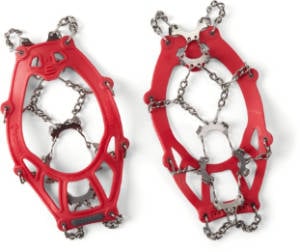
2. Hillsound Path Crampon Extremely

3. Hillsound Path Crampons

4. Black Diamond Distance Spikes

5. Hillsound Path Crampons Professional

6. Kahtoola K10 Crampons

7. Kahtoola KTS Crampons

8. Black Diamond Contact Strap Crampons

9. Petzl Irvis FlexLock Crampons

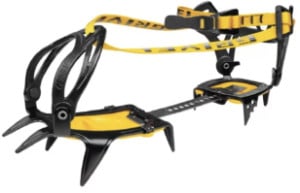
10. Grivel G10 New-Basic EVO Crampons
Winter Traction Units and Crampons FAQ
When you’ve by no means used winter traction aids or crampons, it may be fairly complicated to know what you want and when to make use of it. Listed here are solutions to a number of the commonest questions individuals have, however when you’ve got others, please ask away within the remark part under and we’d be glad to reply them.
I’ve simply began winter mountaineering, what do I want to purchase?
Begin with Kahtoola Microspikes or Hillsound Path Crampon Ultras. When you hike in additional mountainous terrain, I’d additionally suggest getting Hillsound Path Crampon Execs or Kahtoola KTS Crampons. If you want to snowshoe, purchase these too. That may cowl a lot of the bases.
What are microspikes?
Microspikes, additionally referred to as path crampons, are winter traction aids that act like tire chains in your boots or path sneakers. They often have 1-1.5 cm spikes hooked up to chains with elastic harnesses that slip onto your footwear. They’re greatest suited to mountaineering on packed snow and icy trails however are uncomfortable for strolling on paved surfaces.
What’s the distinction between microspikes and crampons?
The first distinction between microspikes and crampons is the size of their spikes. Microspikes, additionally referred to as path crampons, have 1-1.5 cm spikes, whereas crampons have spikes which can be as much as 5 cm in size. Microspikes are used for mountaineering on packed snow and skinny ice, whereas crampons are used for mountaineering on thicker ice, rock, and snow slabs.
Do you want to carry a number of winter traction gadgets on hikes or is one enough?
It actually will depend on the place you might be mountaineering and the situations. However for prolonged winter hikes at a number of ranges of elevation (i.e. mountainous terrain), it’s typically needed to hold microspikes, crampons, and snowshoes so that you’ve got the proper stage of traction or flotation for the floor situations you’re more likely to encounter. An excessive amount of traction, and also you’ll put on your self out by strapping heavy traction aids to your toes or twist an ankle since you used a mountaineering crampon when microspikes are extra applicable.
Do microspikes put on out?
Microspikes do put on out over time, and the tops of their triangular spikes turn out to be flattened, offering much less grip on ice. You may sharpen them with a mill bastard file, however ultimately, they should get replaced.
What are rock spikes?
Rock spikes are microspikes which have worn out. Many hikers maintain them round to be used in early winter or spring situations, when mountaineering trails nonetheless have plenty of uncovered rock and a skinny coating of ice, to protect their newer, sharper microspikes for winter use on thicker ice and packed snow.
What’s the distinction between ice cleats and microspikes?
Ice cleats and ice screws are much less penetrating than microspikes and are appropriate for extra informal dwelling or city use. Ice cleats are sometimes a part of a strap-on overshoe to offer it with extra traction.
What’s an elastomer binding?
Microspikes and path crampons have a stretchy, elastic binding that accommodates all sorts of footwear, from soft-soled winter mountaineering boots and path sneakers to extra rigid-soled mountaineering boots. The elastomer stays versatile right down to -20F and is very sturdy for prolonged use.
What’s a ratchet-style crampon harness?
A ratchet-style binding, like on Hillsound’s Path Crampon Professional, is just like a snowshoe binding the place ridged straps are fed via a buckle that locks them in place. The benefit is a really safe match, which is essential on a crampon, and the power to tighten the binding on the fly whereas carrying gloves.
What’s an instep crampon?
An instep crampon often has 4-6 spikes and attaches to the instep of mountaineering footwear. Whereas it does present added traction and they’re very light-weight, it’s very tough to stability your self when strolling up slopes or over rocky surfaces. They have been used within the early days of mountaineering earlier than crampons or microspikes grew to become standard.
Do microspikes are available a number of sizes?
Microspikes additionally referred to as path crampons, come in several sizes primarily based in your boot or shoe measurement. It’s essential to suit them accurately to footwear to forestall discomfort or friction from utilizing microspikes which can be too small. The identical holds for microspikes that are too massive, can pop off your sneakers, and are simply misplaced.
Are you able to stroll on the pavement with microspikes?
Whereas microspikes are made with chrome steel and are very sturdy, they’re not meant for strolling on pavement or metropolis sidewalks. You’re higher off getting a pair of ice cleats or Yaktrax for that objective.
What’s the distinction between microspikes and crampons?
Crampons have a lot bigger spikes designed to penetrate deep ice on surfaces the place falling isn’t an possibility. Microspikes have shorter spikes that present a great grip on ice surfaces however are much less penetrating. In addition they have a binding system, often an elastomer harness, that’s suitable with a number of footwear varieties, whereas crampon/footwear compatibility is extra restricted.
What are anti-balling plates?
Anti-balling plates additionally referred to as balling plates, ABS plates, or snow launch skins, forestall moist snow from clumping to the underside of a winter traction system or crampon. This happens when the crampon comes into contact with water or moist snow. Balling beneath a crampon is harmful as a result of it prevents the crampon spikes from gaining traction. As an alternative, you slip over the floor of the snow or ice uncontrolled.
Do you want to put on gaiters with microspikes or crampons?
Excessive mountaineering gaiters are designed, partly, to guard your legs from the sharp factors of your crampons and often have bolstered lowers to forestall spike penetration. They’re probably not needed for defense when carrying microspikes as a result of their spikes are a lot shorter. Nonetheless, gaiters additionally forestall your pants from getting moist in deep snow and might be worn for that objective alone.
What’s the distinction between a metal crampon and an aluminum crampon?
Metal crampons are far more sturdy than aluminum ones and are simpler to sharpen after they’ve been worn down. Nonetheless, aluminum crampons are very light-weight and may weigh half as a lot as metal crampons, making them helpful when the lightest gear weight is required.
What’s a step-in crampon binding?
Step-in crampon bindings connect to particular ridges, referred to as welts, which can be reduce into the soles of mountaineering boots. The step-in bindings have hinged steel bars that slot into the welts and type a really tight reference to the boots. Step-in bindings are used for higher-angle mountaineering or mountaineering the place you want a really safe attachment.
What is a versatile leaf spring?
The steel bar connecting the entrance and heel portion of a crampon are often inflexible when the crampon is used with a stiff-soled mountaineering boot. It needs to be changed with a versatile steel bar referred to as a leaf spring, which lets the 2 halves of the crampon, the back and front, transfer independently when the crampon is used with a soft-soled boot or path shoe.
How do you stroll on ice with crampons?
Once you stroll in crampons you need to guarantee that your entire spikes are involved with an icy floor and digging into it. This may increasingly contain bending your ankle and leg to maintain the spikes in steady contact or stomping down on the ice as you stroll. This prevents you from sliding and falling,
Are you able to stroll on rocks with crampons?
It’s typically essential to stroll on rocks with crampons in mountainous terrain. It is best to accomplish that fastidiously to keep away from twisting an ankle and attempt to maintain the floor of your foot as flat or perpendicular to the rock as attainable.
See Additionally:
SectionHiker by no means accepts fee for gear opinions or editorial protection. Once you purchase via affiliate hyperlinks on our web site, we might earn a small fee at no additional value to you. Assist us proceed to check and write unsponsored and impartial gear opinions, mountaineering and backpacking FAQs, and free mountaineering guides.
[ad_2]