
[ad_1]
Do you wish to create wonderful wildlife
images, however you’re unsure how?
Then learn on.
As a result of this text provides you with 6 wildlife images suggestions for persistently wonderful photographs. You’ll uncover how one can discover one of the best mild, how one can create wonderful compositions, and how one can get frame-filling wildlife photographs.
Wildlife Pictures Suggestions
Let’s dive proper in
Tip 1: Use the Low, Gradual Method
to Get Near Wildlife
One of many largest challenges confronted by
newbie wildlife photographers:
Getting shut.
You see, irrespective of how lengthy your lens, you’ll nonetheless have to do some actual work within the subject – to be able to seize frame-filling wildlife photographs.
See additionally: Lens Wanted for Wildlife Pictures
There are a couple of methods you may get shut sufficient
to wildlife to seize stunning photos.
However my favourite is the low, gradual strategy,
which is often profitable and is nice for conditions the place you haven’t
arrange a blind upfront.
Right here’s the way it works:
- Begin by discovering a topic which you could see within the distance, and place your self in order that the sunshine is at your again.
- Then transfer ahead slowly, with a number of stops and begins, and with none sudden strikes. Hold your head down and don’t make eye contact with the wildlife.
- Transfer to the best for a couple of moments, then wander left, then stand nonetheless for a bit. However be sure to proceed to maneuver in the identical general course so that you simply’re making progress getting near your topic.
- When you get decently shut, it is best to drop all the way down to your knees, and even to your elbows (if you happen to’re prepared). Proceed to maneuver towards the wildlife whereas conserving your head down. However take it even slower, dragging your self a couple of toes earlier than stopping. Monitor your topic out of the nook of your eye.
- At this level I like to recommend you snap a couple of photographs in order that the wildlife can get used to the sound of a digicam shutter.
Proceed on for a bit…
…till you’re shut sufficient to start out taking
photographs. Then cease, and begin snapping photos.
If all goes nicely, your complete course of might take
15-45 minutes; be affected person and don’t rush issues.

Additionally, a observe:
The welfare of your topic is necessary. If
you’re photographing an animal that’s clearly careworn, then cease. It’s not
price capturing the shot if you happen to can’t be happy with the story behind it.
Tip 2: Level Your Shadow on the
Wildlife for the Finest Lighting
One of many issues newbie wildlife photographers wrestle with on a regular basis is the mild.
It’s really easy to exit throughout harsh, disagreeable daylight – and are available away with a reminiscence card filled with poor photographs.
As a result of noon sunny mild doesn’t actually work for wildlife images. As a substitute, it is best to shoot on cloudy days, or throughout the golden hours.
Nevertheless it’s not sufficient to simply present up at dawn and sundown, level your digicam on the topic, and begin taking pictures. You need to do greater than that.
The important thing factor to recollect is to concentrate
to the sunshine’s course.

The very best mild for wildlife images comes from behind the photographer and falls immediately onto the topic. That is generally taught as a ‘level your shadow on the wildlife,’ as a result of you’ll find one of the best mild by doing simply that; pointing your shadow at your topic ensures that you simply get some stunning frontlight.
Now, you can even seize some distinctive photographs
by using sidelight (the place the sunshine falls onto the aspect of the wildlife),
and even backlight (the place the sunshine comes from behind the wildlife). However these
are non-standard lighting eventualities, and take some endurance to take care of.
That’s why I like to recommend newcomers begin with frontlight, and solely then graduate
to harder mild selections.
Tip 3: Place the Wildlife
Shifting Into the Body
Relating to really composing a wildlife
photograph, you might wrestle to fastidiously place an animal within the body.
It’s particularly tempting to stay your topic within the lifeless heart of the photograph, however resist this temptation as a result of that is among the worst doable issues you are able to do.
As a substitute, attempt level your wildlife into the body, so it looks as if the animal is working into the empty house (no matter whether or not they are surely).
See additionally: Tutorials for Wildlife Pictures for Newcomers
It will give your photograph a way of dynamism just like the animal is shifting. Plus, the viewer will comply with the gaze of the animal straight into the remainder of the photograph (in different phrases, they’ll grow to be engaged!).

Notice that it’s not sufficient to simply place the wildlife so it’s shifting into the body. You’ll additionally wish to be sure to don’t minimize off the again of the animal as a result of that may make the photograph really feel disjointed. As a substitute, add a bit off room on the again, in addition to the highest and backside.
Associated: Composition in Pictures – Sensible Information
Oh, and just be sure you don’t minimize off the
wildlife’s toes! As a result of that mainly by no means works.
You wish to find yourself with an animal shifting into
the body, with satisfactory room on the highest, backside, and sides.
An ideal wildlife composition!
Tip 4: Shoot from a Low Angle for
Intimate Wildlife Images
Right here’s a extra superior wildlife images
tip for you:
Get down low to {photograph} wildlife. Actually low.
Principally, try to be on the identical stage because the wildlife–on the very least.
See additionally: Chicken Pictures Tools
So if you happen to’re photographing a small hen on the
floor, try to be pressed flat in opposition to the grime. In the event you’re photographing a
moose, you might be standing up pretty straight, although relying in your peak
you might have to kneel down a bit.
Why is that this so necessary?
As a result of photographs taken from standing peak are…boring. They really feel such as you simply walked by and took a snapshot.
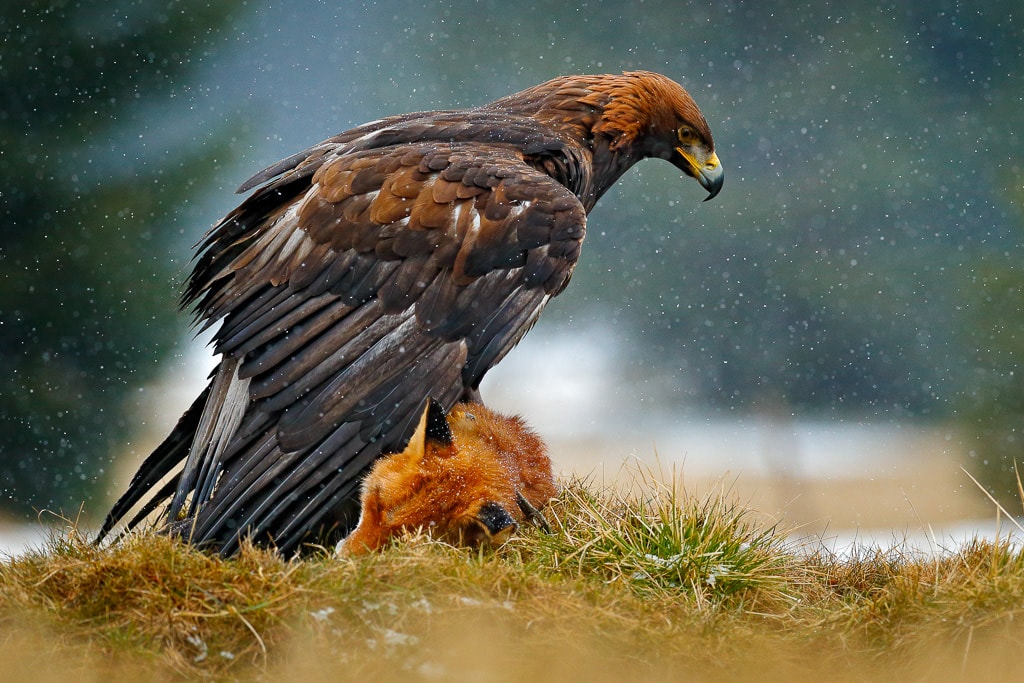
Whereas photographs taken from down low, with you
taking pictures on a stage with the wildlife really feel a lot extra thrilling and
attention-grabbing and intimate.
It’ll take some effort. It’ll take some
willingness to get soiled.
But when you may get on a stage together with your
topic, your photographs will look so a lot better.
Tip 5: Select the Cleanest
Background that Enhances the Topic
Choosing the right background is a key wildlife images problem and one that the majority newcomers simply don’t acknowledge.
As a result of the best background will make your topic stand out. It’ll make your topic pop off the web page.
Associated: Foreground, Middleground and Background in Pictures
Now, one of the best backgrounds are very clear. They
comprise no distractions. Nothing that would draw the attention away from the
wildlife.
One of many methods to make sure you get a clear
background is through the use of a large open aperture, however this comes with a disadvantage:
You gained’t get the entire animal sharp.
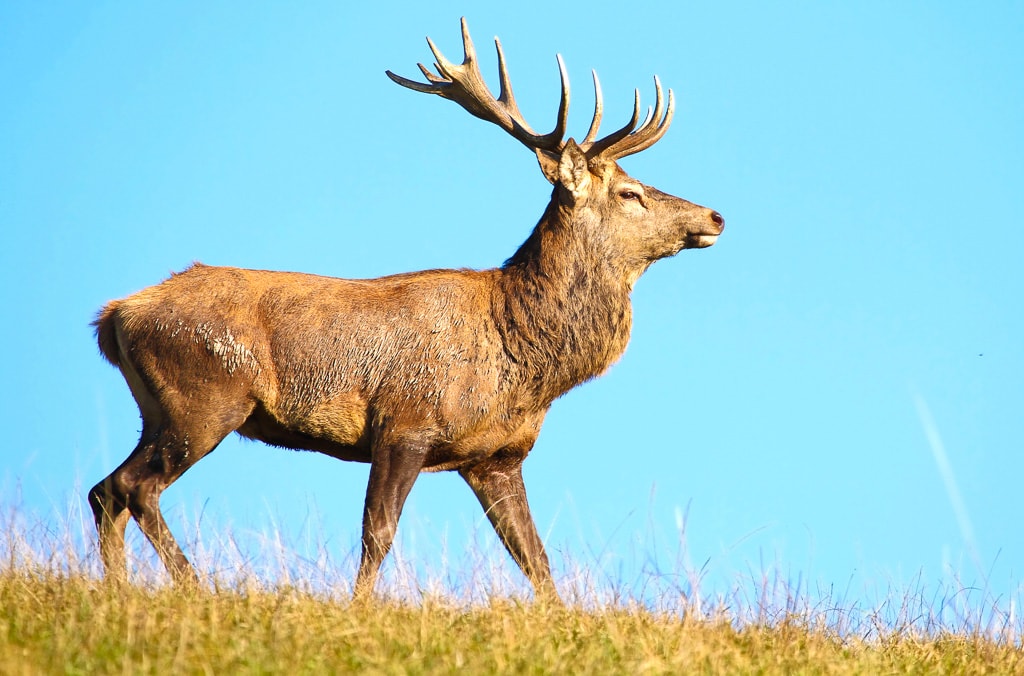
And typically, you wish to maintain the wildlife sharp. So as a substitute of utilizing a huge open aperture, I’d advocate fastidiously positioning your self in order that the gap between the topic and the background is as massive as doable. The bigger this distance, the blurrier the background will grow to be. And the cleaner the background will look.
See additionally: Finest Nikon lenses for hen images
By the way in which, a cool trick to extend the
subject-background distance is to get down low. It will trigger the background
to fall away, and also you’ll get a pleasant blur (plus, you’ll get the intimate
perspective I talked about above!).
Another factor I ought to observe:
Some backgrounds are simply too messy to work
with, even if you happen to’re utilizing a large aperture, and even when the subject-background
distance is enough. So that you don’t be afraid to simply hand over on a background,
particularly as a result of you may usually stroll to the best or left and get a background
that’s fully completely different.
Tip 6: Use Steady Taking pictures
Modes and ‘Spray and Pray’
Wildlife images is commonly very fast-paced.
Actually, you might spend hours ready for a shot that seems and disappears in a single prompt.
See additionally: Finest Reasonably priced Digicam for Wildlife Pictures
Which implies that it’s important to be prepared for
something–any movement of the wildlife, any attention-grabbing conduct, and many others.
That’s why I like to recommend you set your digicam in its steady taking pictures mode to be able to seize the very best variety of frames per second doable.
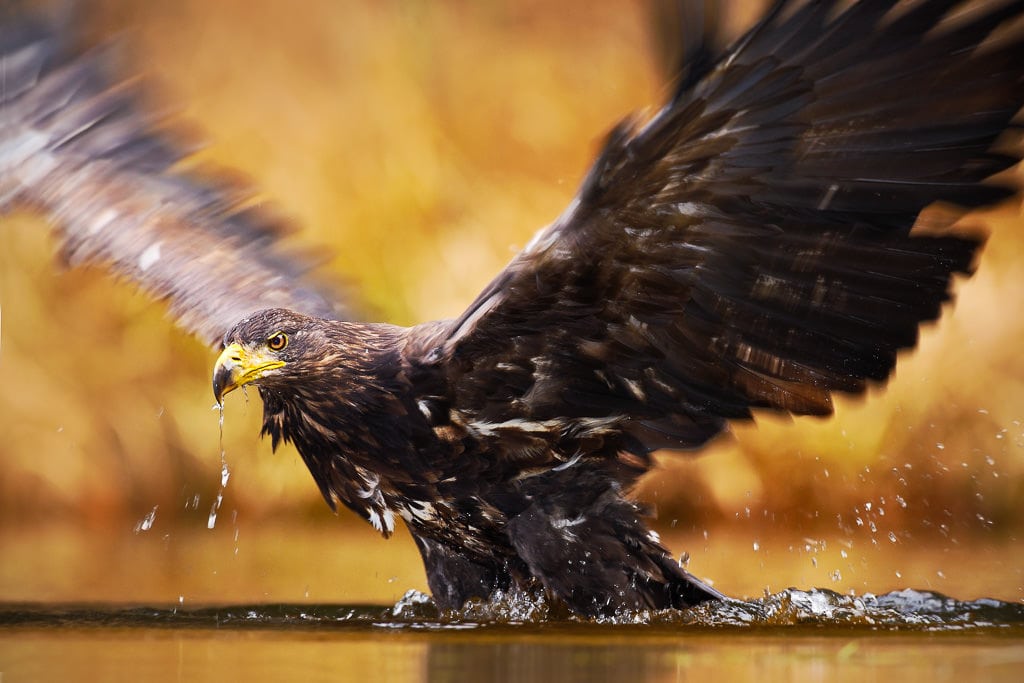
And be prepared together with your finger on the shutter button. If it’s important to take dozens of pictures to get the one one which works, that’s positive. You’ll be able to delete all of the unhealthy photographs later–when you’ve grabbed the million greenback shot.
See additionally: Wildlife Pictures Settings
So don’t be afraid to shoot as quickly because the
willdife begins doing one thing attention-grabbing, and don’t be afraid to hold on
holding down your finger till the wildlife stops.
That’s the way you’ll maximize your variety of
keepers.
High 6 Pictures Suggestions for Gorgeous Images: Conclusion
Now that you simply’ve completed this text, you
have all of the wildlife suggestions you could create wonderful wildlife photos.
So simply bear in mind what I’ve advised you:
- Fastidiously get shut.
- Use frontlight as a lot as doable.
- Level the topic into the body.
- Get down low.
- Choose the cleanest background doable.
- {Photograph} in bursts.
- And have enjoyable taking pictures!
Articles Associated to “High 6 Wildlife Pictures Suggestions for Gorgeous Images“
[ad_2]